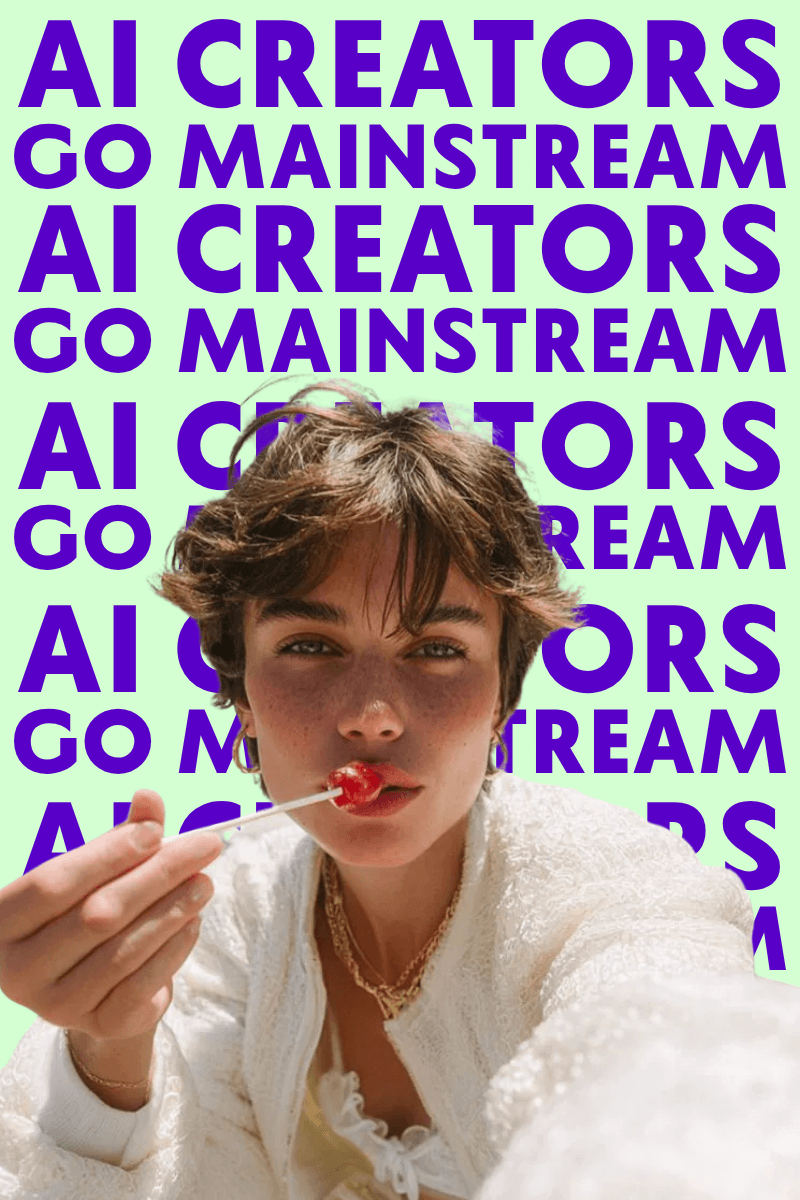
AI Personalities Go Mainstream
From Experiment to Ecosystem
Virtual creators aren’t new. Lil Miquela has been posting since 2016, releasing music, appearing in Calvin Klein campaigns alongside Bella Hadid, and taking over Prada’s Instagram during Milan Fashion Week. Noonoouri has worked with Dior, Versace, and Marc Jacobs, and signed a record deal with Warner Music Group. For years, though, accounts like these felt like a curiosity, interesting case studies, not a category brands needed a strategy for.
The numbers say that’s changed. The virtual influencer market was valued at $6.06 billion in 2024 and is projected to reach $45.88 billion by 2030. Around 150 AI influencers are now active on Instagram, with top accounts charging up to $21,000 per sponsored post. A 2025 survey from Billion Dollar Boy found that 79% of senior marketers said they were increasing investment in AI-generated creator content. Instagram’s new label doesn’t create this shift. It confirms one that was already well underway, and gives the platform a formal way to manage it.
Why the Label Matters More Than It Looks
An opt-in badge sounds minor, but it does two important things at once.
It legitimizes the category. By building a dedicated label rather than treating AI accounts as an edge case to police, Instagram is telling advertisers and creators that AI-driven personas are a recognized part of how the platform works, not a loophole. That’s the kind of signal brands usually wait for before committing budget.
It puts disclosure on the table. Regulators, including the FTC, already require clear disclosure of both a creator’s AI nature and any paid partnership. A platform-level label makes that disclosure easier to standardize and harder for brands to treat as optional. Transparency is becoming a built-in feature of this category, not an afterthought bolted on after controversy.
The Business Case Brands Can’t Ignore
Skepticism about AI creators usually focuses on authenticity, can an audience really trust a persona that isn’t a person? That’s a fair question, but it’s increasingly beside the point commercially. The numbers behind virtual creators are already competitive with human ones.
Lil Miquela partnered with 91 brands in a single year and generated an estimated $235,000 in media value. Top-earning virtual influencers like Lu do Magalu have pulled in $2.5 million in annual brand revenue from sponsored posts alone. Sponsored post rates for virtual influencers average $1,500 to $11,000, squarely inside human creator territory, and the most established personas stack multiple income streams, brand deals, licensing, subscriptions, affiliate revenue, the same playbook human creators use to build durable careers.
For a brand, an AI creator offers something a human one can’t: total control. No off-brand scandal risk, no scheduling conflicts, no limit on how many markets or languages a persona can appear in at once. That’s not a reason to abandon human creators. It’s a reason AI creators are becoming a serious line item next to them, not a replacement for them.
The Question Brands Actually Need to Answer
The debate over whether AI creators are “legitimate” is largely settled by the market itself, luxury houses, tech brands, and record labels have already answered it with contracts. The more useful question for any brand right now is different: does a content and partnership strategy that ignores this category still make sense twelve months from now?
Given the trajectory, a platform-level label, a market headed toward $45 billion, and 79% of marketers already increasing investment, the honest answer for most brands is no. That doesn’t mean rushing into an AI creator partnership this quarter. It means treating the category the way any serious marketing team treats an emerging channel: understanding how it works, watching who’s using it well, and having a point of view ready before a competitor forces the question.
Final Thoughts
Instagram’s AI Creator label is a small feature with a large implication: virtual creators are no longer an experiment sitting outside the mainstream creator economy, they’re being built into it. Brands don’t need to have an AI creator strategy finished today, but ignoring the category entirely is a decision with an expiration date. The businesses that get ahead here will be the ones treating this as infrastructure worth understanding now, not a trend to react to later.
Want help figuring out where AI fits into your marketing mix? Get in touch and let’s build a strategy that’s ready for what’s next.