One World Cup Moment, One Overnight Creator Career
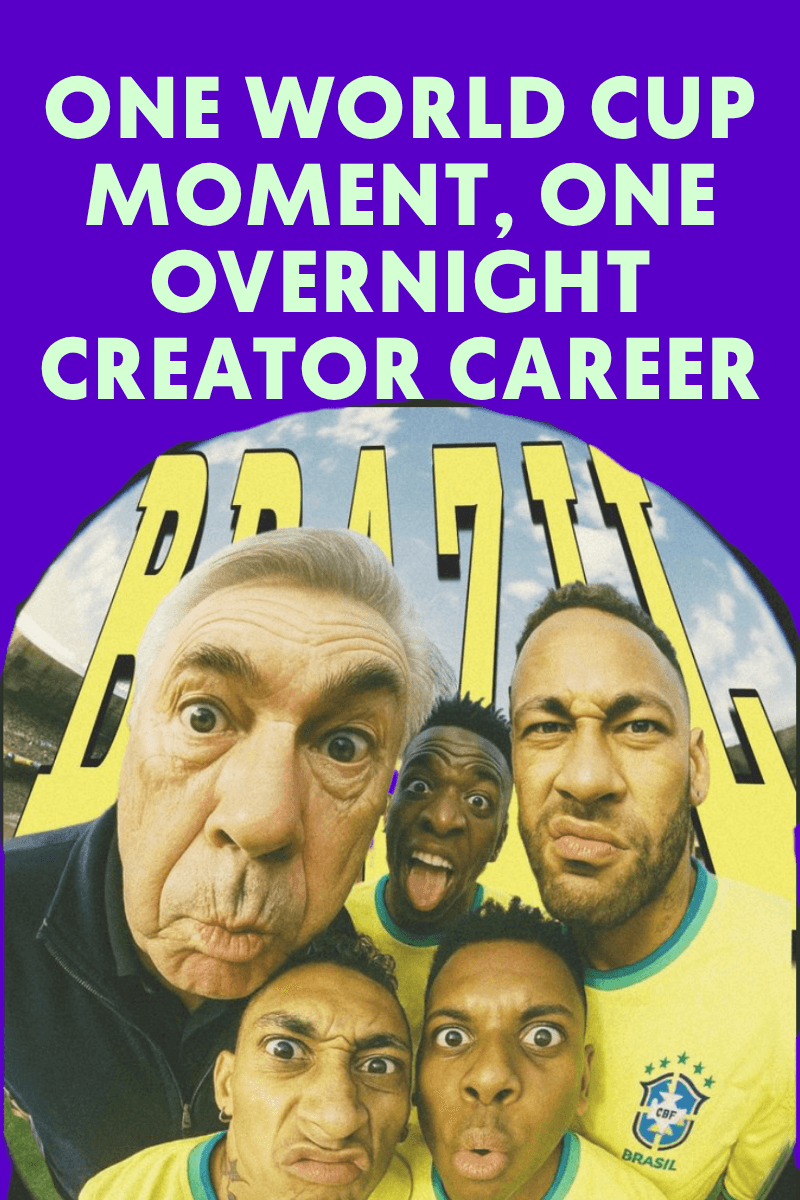
He wasn’t alone. New Zealand defender Tim Payne became famous for the opposite reason, he had the fewest Instagram followers of any player at the tournament, under 5,000, until an Argentine influencer turned that obscurity into a rallying cry. Payne’s following shot toward six million before his team had even kicked a ball.
These aren’t outliers anymore, they’re the pattern. The 2026 World Cup has made it clear that a single moment, a save, a scandal, a viral clip of an unknown player, can now manufacture global fame faster than almost any other event on the planet. But the same tournament is also a case study in the fame’s fragility. Going viral, it turns out, was never the hard part.
The Machine That Builds Stars in a Day
What makes the World Cup uniquely good at minting overnight creators is the collision of three forces that rarely align this cleanly anywhere else.
The first is scale: billions of people watching the same live event at the same time, so a single moment has a ready-made audience; no slow build needed to find its first thousand viewers. The second is narrative hunger. Fans and commentators are actively looking for storylines beyond the score, and an underdog goalkeeper or an anonymous defender fits a story people want to tell before the final whistle even blows. Finally, the third is the creator economy itself, which now exists specifically to amplify moments like this. Posts tagged around this year’s tournament have driven nearly two billion dollars in earned media value across a quarter of a million creator posts, a machine built to take a 10-second clip and turn it into a global event within hours.
Put those together and you get what happened to Vozinha and Payne: a compression of what used to take a career, visibility, a fanbase, brand interest, into a single afternoon.
Virality Is a Starting Gun, Not a Finish Line
Here’s the uncomfortable truth the World Cup also exposes: none of this guarantees anything lasts.
Research into internet fame consistently finds that viral moments are driven less by enduring talent than by timing, relatability, and algorithmic luck, the same forces that can build a following in a day can just as easily move on to the next story the following week. Engagement-based algorithms don’t reward loyalty to yesterday’s moment; they reward whatever is newest. A player who trends during the knockout rounds is competing, four weeks later, with an entirely new news cycle, a new set of viral clips, and an audience that has already moved on to the next thing.
This is where the real test begins, and it has almost nothing to do with football ability.
What Separates Creators Who Last
The athletes and creators who convert a viral spike into an actual career tend to do a few specific things differently.
Consistency matters most. Accounts that sustain their following don’t disappear back into obscurity once the moment passes. They post regularly, engage with the audience that just arrived, and give people a reason to stay rather than just having glanced at one clip. Attention that isn’t fed tends to wander.
Diversification protects against the algorithm. Relying on one platform, one moment, or one algorithm’s continued favor is a fragile strategy. Creators who build something durable spread across platforms and build a recognizable identity, a voice, a niche, a reason to follow them specifically, rather than hoping the original clip keeps recirculating.
Multiple income streams create real stability. Data from creator economy research suggests most full-time creators only reach financial sustainability once they’ve layered in three or more revenue sources: brand deals, merchandise, appearance fees, coaching, whatever fits. A single viral moment might open the door to a sponsorship, but it rarely funds a career alone.
Perspective is what ties it together. Virality doesn’t prove anything about staying power. It just buys attention. What creators do with that attention in the following weeks is the actual work, the moment gets you noticed; everything after is a second, harder job.
What the World Cup Actually Proves
It would be easy to read Vozinha’s 12-million-follower surge or Payne’s rise from near-anonymity and conclude that going viral is the hard part of building an audience today. The World Cup argues the opposite. Going viral has arguably never been easier, a good tournament, a well-timed clip, and a receptive creator economy can do most of the work for you. What the tournament can’t do is guarantee any of these players are still commercially relevant, still followed, still building something a year from now.
That’s a genuinely different skill from the one that got them noticed in the first place. It has less to do with performing well on the biggest stage in sports and more to do with what looks, from the outside, a lot more mundane: showing up consistently, diversifying where you’re seen, and building something an audience wants to stick around for even after the World Cup ends and the next headline takes its place.
The tournament will crown a champion in a few weeks. It’s already crowned a handful of accidental creators. Which of them are still relevant a year from now will say a lot less about the World Cup than it will about what each of them chooses to do with the moment they were handed.
Final Thoughts
The 2026 World Cup proved that a single moment, a save, a snub, a viral clip, can now build a following of millions in a matter of hours. But Vozinha and Payne’s, real test isn’t the follower count they woke up with; it’s whether they’re still relevant once the tournament ends and the internet’s attention moves on. Virality gets you noticed. Consistency, diversification, and multiple revenue streams are what turn that notice into an actual career.
The same is true off the pitch. A viral moment can hand any brand or creator an audience overnight, but showing up for that audience, day after day, across the right platforms, is a different job entirely.
Want help with your social publishing? Get in touch and let’s turn your next big moment into lasting momentum.